
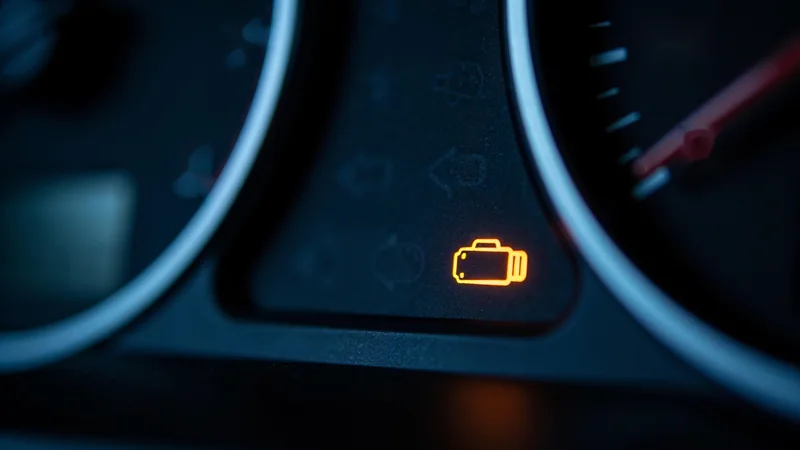
An amber check engine light glowing on a dark dashboard

Illustration: a lit check engine light on a dark dashboard

CHECK ENGINE LIGHT · SAUGUS, MA

Check Engine Light Diagnostics in Saugus, MA

If your check engine light is on, V-Tech Auto Services in Saugus, MA will find out why. Our team reads the code, tests what it points to, and explains the cause in plain words before any repair, on foreign and domestic cars for drivers in Saugus and the North Shore.

Open Monday–Friday, 8:00 AM–5:00 PM · Closed weekends
  • We explain what's wrong before we touch anything.
  • You hear what's urgent, what's soon and what can wait.
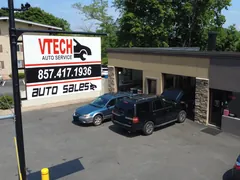
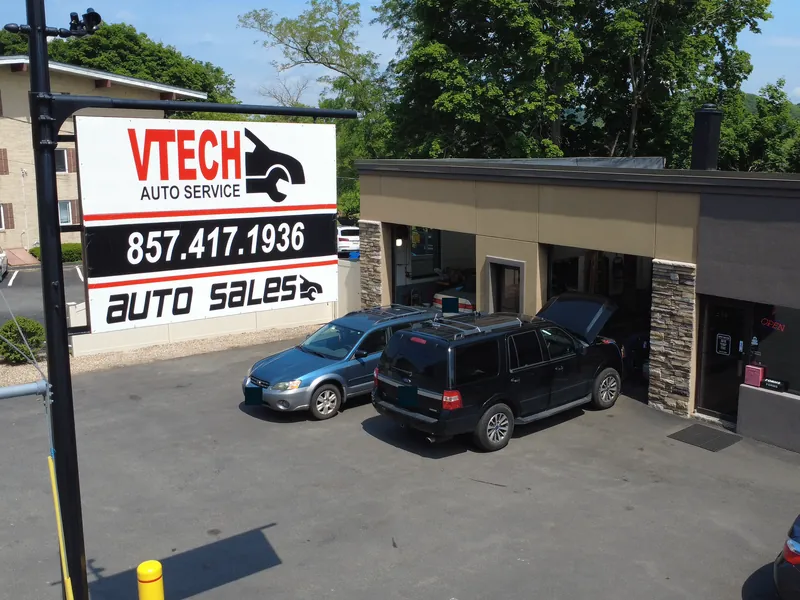
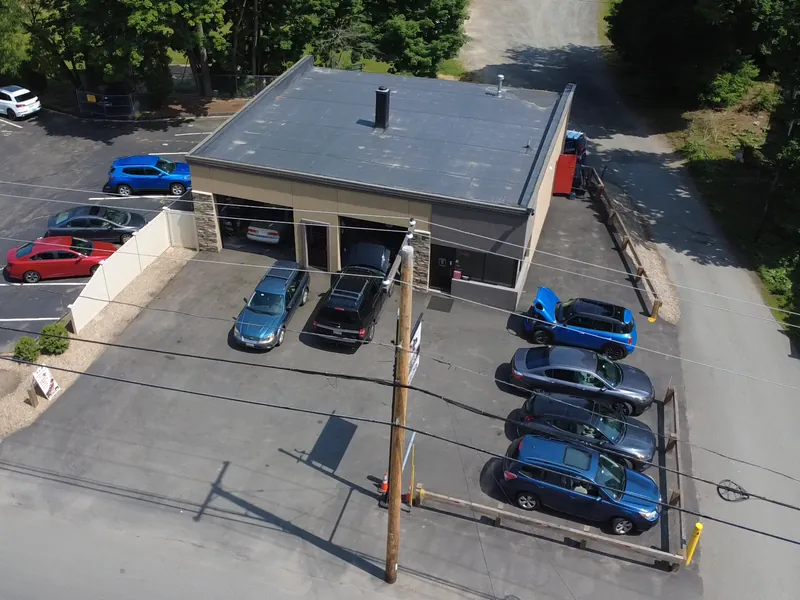
V-Tech Auto Services shop with its roadside sign and garage bays, seen from a droneOur shop in SaugusReal photos, further down

  • Master Mechanic-led team28 years' hands-on experience
  • 15+ years in businessLocal Saugus shop
  • Foreign & domesticSmall & medium vehicles
  • 24 Winter St, SaugusServing the North Shore

Steady or flashing: can I keep driving?

  • Warning light icon: a triangle with an exclamation markFlashingUsually a serious misfire, meaning one of the engine's cylinders isn't burning its fuel. Fuel that doesn't burn in the cylinder ends up in the exhaust, where it can cook the catalytic converter (the part that scrubs the exhaust before it leaves the car). Ease off, skip hard acceleration and heavy loads, and call us. If the car shakes badly or you smell burning, pull over somewhere safe.
  • Temperature icon: a thermometerA red light is a different warning.If a red oil-pressure or engine-temperature light comes on, pull over safely and shut the engine off. Driving on can damage the engine.
  • Warning light icon: a triangle with an exclamation markSteadyThe computer has found a fault, but it usually isn't an emergency. If the car drives normally, get it checked soon, not someday. A small fault left alone can turn into a bigger one.
Steady versus flashing check engine lightTwo check engine lamps side by side. Steady: get it checked soon. Flashing: ease off and call.Steady:get it checked soonFlashing:ease off and call
What a steady light and a flashing light usually mean.
A wet road at night seen through a car windshield

Check engine light flashing? Go easy and call us.

Call (857) 417-1936Monday–Friday, 8 AM–5 PM

Illustration: a wet road at night, from the driver's seat
What the check engine light means

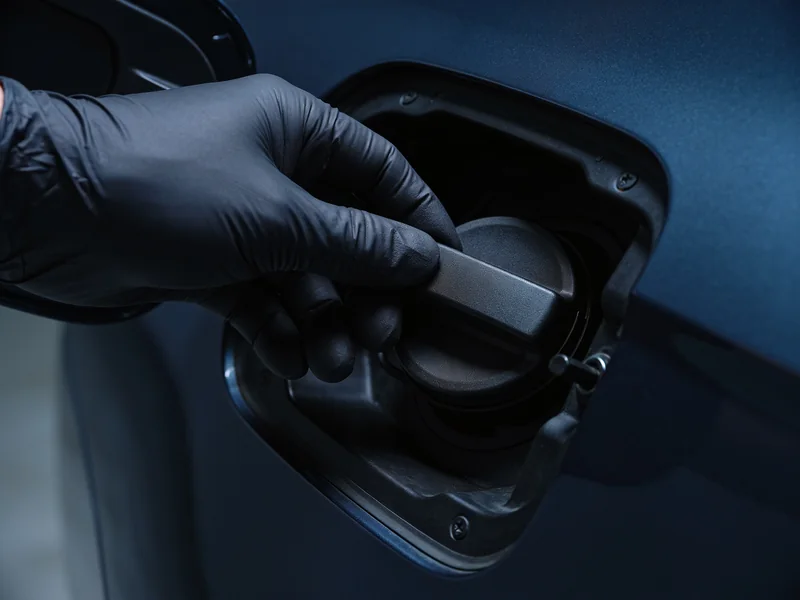
A gloved hand gripping a fuel cap, with the car's fuel door open
Illustration: a fuel cap, with the fuel door open

The check engine light is the yellow or orange engine-shaped symbol on your dashboard. When it stays on, your car's computer has noticed a problem and saved a fault code: a short code, like P0301, that names the system involved. Every car sold in the U.S. since the 1996 model year has this self-check system, called OBD-II.

The light looks the same for a loose gas cap as it does for an engine misfire. The only way to know which one you have is to find out what's behind it. (It also lights up for a second or two when you start the car. That's a bulb check, and it's normal.)

Why a code reader is not a diagnosis

A code reader shows which code is stored, and that's a useful start. But a code tells you where the computer noticed a problem. It doesn't always tell you what caused it. Two common examples:

  • A "lean" code means the engine is getting too much air for the fuel it's burning. The cause could be a cracked vacuum hose letting in extra air, a dirty airflow sensor, a weak fuel pump or a clogged fuel injector.
  • An oxygen-sensor code can come from an exhaust leak just ahead of the sensor, with nothing wrong with the sensor itself.

Replace the wrong part and you've paid for it and you still have the light. Testing is what turns "the code says" into "this is what failed."
One trouble code, several possible causes, one tested causeA lean code chip leads to four candidate causes: vacuum hose, airflow sensor, fuel pump and injector. Testing rules three out and marks one as the failed part.Lean codeVacuum hoseAirflow sensorFuel pumpInjectorTest
One code can point to several parts. Testing finds the one that failed.

Check engine light diagnostics in Saugus: what we do

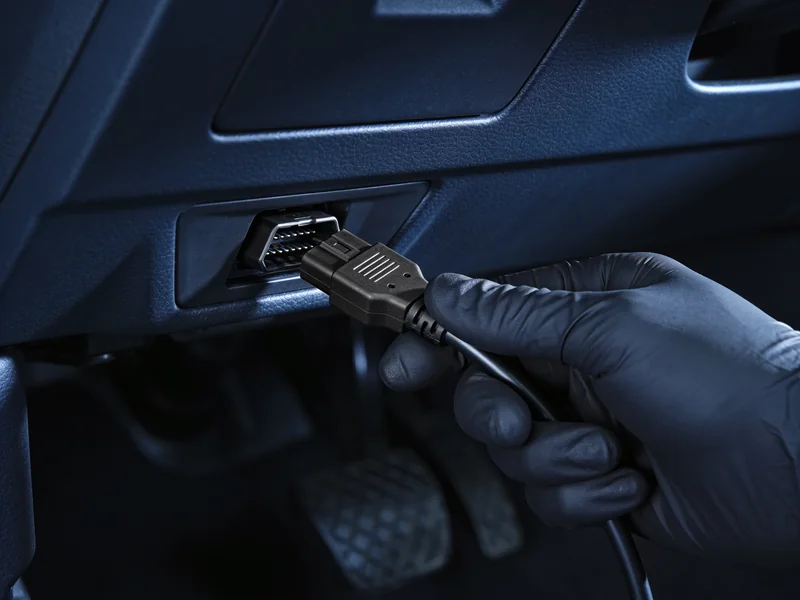
A gloved hand plugging a diagnostic connector into the port under a dashboard
Illustration: a diagnostic connector going into the port under a dashboard

At our Saugus shop, it goes like this:

  • We listen first.When did the light come on? Is it steady or flashing? Is the car running, sounding or smelling different? You know your car, and that narrows things down.
  • We read the stored codes.They tell us which system to look at.
  • We test before replacing.We check the part or circuit the code points to, so the repair goes to what actually failed.
  • We explain, then you decide.You hear what we found, in plain words, before any repair.

What you get before we repair anything

We sort what we find into three groups, so you know where you stand:

Fix now

A misfire, overheating, or anything that changes how the car drives or stops.

Plan it soon

A fault that will get worse or burn more fuel if it's left, like a failing sensor.

Can wait

Something minor that isn't hurting the engine, which you can plan around.

You'll also hear what it isn't. For a lot of people, that's the biggest relief of all.

Common causes of a check engine light, in plain words

  • A loose or worn gas cap.The fuel system is sealed to keep fuel vapor in, and a cap that doesn't seal can set a code. You might notice: nothing else, or a faint fuel smell. Tighten it until it clicks. The light can take a few drives to go off.
  • An oxygen sensor.This sensor sits in the exhaust and tells the computer whether the engine is burning too much fuel or too little. You might notice: worse gas mileage.
  • Spark plugs or ignition coils.They make the spark that burns the fuel. When one fails, a cylinder misfires. You might notice: shaking at idle, stumbling when you accelerate, a flashing light. More on our engine repair and tune-ups page.
  • The catalytic converter.It cleans the exhaust gases, and it often fails because of another problem, like a misfire that went on too long. You might notice: sluggish acceleration, a rotten-egg smell.
  • The mass airflow sensor.It measures the air coming into the engine. You might notice: hesitation, rough idle, stalling.
  • Vacuum or vapor leaks.A cracked hose or a worn seal lets extra air in or fuel vapor out. You might notice: a hiss, a rough idle, or nothing at all.
  • An exhaust leak.Outside air sneaking into the exhaust before it reaches an oxygen sensor confuses the sensor. You might notice: a louder engine, or a ticking or puffing sound. See muffler and exhaust repair.
  • A weak battery or charging problem.Low voltage can set codes and light up several warnings at once. You might notice: slow starts, dim lights. See starter, alternator and battery.

What customers say on Google

… I’ve had incredible experiences from check engine lights, brakes, tires and general repair. I highly recommend this business.

Michael GillGoogle review · Sept 2023

… He showed me all the work he was going to complete and everything after he completed it. …

Ryan CliffordGoogle review · Jan 2024

Check Engine Light & Diagnostics FAQs

Can I drive with the check engine light on?

If it's steady and the car drives normally, usually yes, for a short while. Get it checked soon so a small fault doesn't grow. If it's flashing, ease off and call us, because that usually means a misfire that can damage the catalytic converter. If a red oil or temperature light comes on too, pull over safely and shut the engine off.

What does a flashing check engine light mean?

Usually a serious misfire: one or more cylinders isn't burning its fuel properly. The unburned fuel goes into the exhaust and can overheat the catalytic converter. Drive gently, avoid hard acceleration, and call us as soon as you can.

Why did my check engine light come back after I cleared it?

Clearing a code turns the light off. It doesn't fix the fault. If the problem is still there, the computer sees it again and turns the light back on, sometimes the same day, sometimes after a few drives. Finding and fixing the cause is the only way to keep it off.

How much does a check engine light diagnosis cost?

It depends on the car and what the problem turns out to be, so we don't post a number here. Call and ask. We'll tell you what's involved before we start, and nothing gets repaired until you've heard what's wrong and decided.

Does a code read at a parts store tell me what's wrong?

It tells you which code is stored, which is a helpful first step. But a code points to a system, not always to the part that failed, and the same code can have several causes. Testing is what tells you which part it is, so you don't pay for one you didn't need.

My car drives fine. Do I still need to get the light checked?

Yes, though it usually isn't urgent. Many faults, like a small vapor leak or a sensor starting to fail, don't change how the car feels at first. Some get worse or cost you fuel if they're left alone. And while the light is already on for one fault, it can't warn you about a new one.

Visit the shop in Saugus

The shop is at 24 Winter St in Saugus. Our service area is Saugus and the nearby North Shore towns below.
  • Saugus
  • Lynn
  • Revere
  • Malden
  • Melrose
See the areas we serve

V-Tech Auto Services

24 Winter St
Saugus, MA 01906
Get directions
Mon–Fri
8:00 AM–5:00 PM
Sat–Sun
Closed

Real photos of our shop in Saugus, taken by drone.

Mon–Fri8 AM–5 PM

Call(857) 417-1936

Check engine light on? Call V-Tech.

Tell us whether the light is steady or flashing and what the car is doing, and we'll tell you how soon to bring it in.

Closed right now? Send us a message, and call us Monday–Friday, 8 AM–5 PM.